
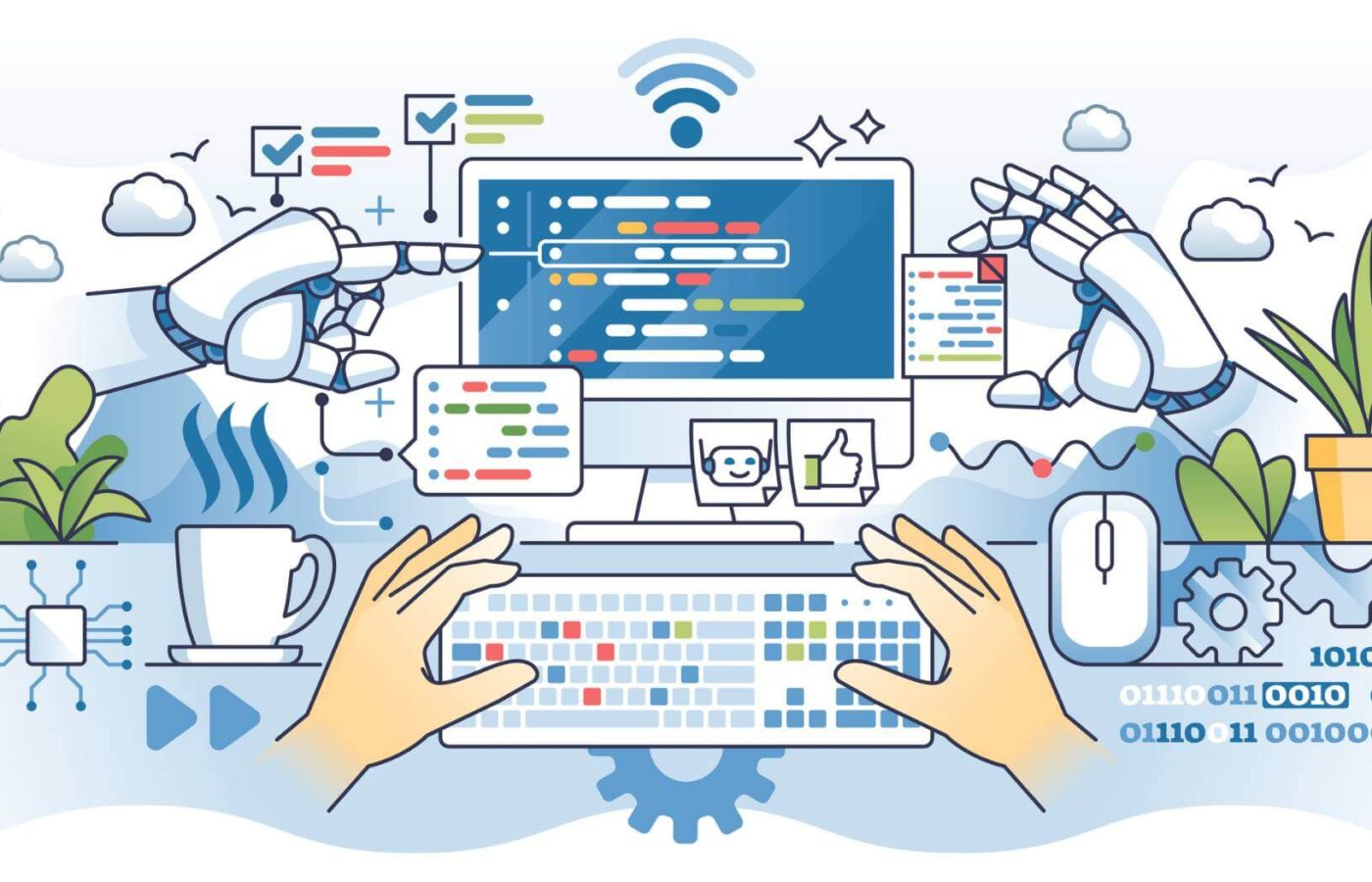
Artificial intelligence (AI) has moved quickly from something people talked about to something they use every day. Most design and development tools now include AI features, and it’s changing how websites are planned, designed, and built.
For people who work in web design and development, that raises an obvious question: what does it mean for my job? It’s a fair thing to wonder. When a tool can generate a page layout or write a block of code in seconds, it’s natural to question where people fit in.
The good news is that the picture is far less worrying than the headlines suggest. AI is very good at some parts of a website project and not very good at others, and knowing the difference helps designers, developers, and the businesses they work with get the most from it.
In this blog, we’ll explore what AI in web design and development is, how it works, the benefits and limitations to be aware of, and what it means for the future of web designers and developers.
What is AI in web design and development?
AI in web design and web development is the use of artificial intelligence tools to help plan, design, build, or improve a website. Rather than replacing the design or development process, AI speeds up parts of it by generating ideas, automating repetitive tasks, and analysing data that would take a person much longer to work through.
AI tools used in web design and development typically fall into a few groups, including:
- AI website builders that generate a draft site from a short description
- Design assistants that suggest layouts, colour palettes, imagery, and copy
- Coding assistants that write, explain, and check code
- Analytics and testing tools that spot patterns in how people use a website
- Personalisation tools that change content based on who’s visiting
It’s also worth noting what AI in web design and development isn’t. Even the most advanced tools still need someone to set the direction, check the output, and make the decisions. AI can produce a website quickly, but it can’t tell whether that website is right for your business, your audience, or your goals.
How does AI in web design and development work?
Most AI tools work by learning from very large amounts of existing data, such as millions of websites, design files, and code examples. When you give AI a prompt or a brief, it uses those patterns to predict what a good response looks like.
In a typical website project, that might look like:
- Research and planning – typically summarising competitor sites, audience research, or survey results
- Design – producing early layout ideas, wireframe options, or image variations to react to
- Content – drafting first versions of page copy, meta descriptions, or alt text
- Development – suggesting code, finding bugs, and writing tests
- Launch and beyond – analysing user behaviour and suggesting improvements
Because AI is predicting based on what already exists, it’s very good at producing something that looks familiar and works in a general sense. What it can’t do on its own is understand the context behind a project, which is why the designers and developers involved still matter.
What are the benefits of AI in web design and development?
When used well, AI can make website projects faster, more efficient, and more informed. Here are some of the main benefits of using AI in web design and development.
1. Faster ideas and early designs
The early stages of a project often involve exploring lots of options before settling on a direction. AI can speed this up considerably by producing layout ideas, mood boards, and design variations in minutes.
This allows designers to:
- Explore more creative directions early on
- Test ideas with stakeholders sooner
- Spend less time on repetitive production work
- Put more of their time into the decisions that shape the final design
The result is often a better-informed design, because more ideas have been considered before the team commits to one.
2. Quicker and more efficient coding
For developers, coding assistants can write routine code, suggest improvements, and explain unfamiliar code. They can also help find bugs and write tests, which saves time on some of the more repetitive parts of development.
That doesn’t mean code can go live without being checked. AI-generated code can contain errors, security gaps, or outdated methods, so it still needs reviewing by an experienced developer. When it’s used this way, though, it can help projects move faster without cutting corners.
3. A better user experience
AI can help create more helpful, personalised experiences for the people using a website. Some common examples include:
- Chatbots that answer common questions at any time of day
- Product or content recommendations based on what someone has viewed
- Search tools that understand what people mean, not just what they type
- Content that changes depending on location, device, or behaviour
When these features solve a real problem for users, they can make a website easier to use and encourage people to stay longer. Good user experience (UX) design is still what makes them work, though. A chatbot that can’t answer questions frustrates people more than no chatbot at all.
4. Deeper insight into how people use your website
One of the most useful applications of AI is analysing user behaviour. AI tools can work through large amounts of data from analytics, heatmaps, and session recordings to highlight patterns a person might miss.
This can help you understand:
- Which pages people find most useful
- Where users get stuck or leave
- Which content and calls to action (CTAs) lead to enquiries
- How different audiences use your website
These insights give designers and developers a clearer picture of what to improve, so changes are based on evidence rather than guesswork.
5. Support for search visibility
AI tools can help with parts of SEO, such as researching keywords, spotting technical issues, and suggesting ways to improve content. They’re also changing how people search, with AI-generated answers now appearing at the top of many search results.
That makes it more important than ever for websites to be well structured, fast, and clearly written, so they can be found and quoted by both search engines and AI tools. You can read more about this in our guide to what search intent means for SEO.
What are the limitations of AI in web design and development?
While AI brings plenty of benefits, it’s important to understand its limits too. As we explore below, these are the areas where people are still essential.
Understanding your brand and your audience
AI can produce a website that looks professional, but it doesn’t know your business. It won’t understand why your customers choose you, what makes you different from competitors, or the tone that suits your brand unless someone tells it, and even then it can miss the mark.
That’s why strategy, research, and brand thinking still sit at the start of any successful project. Without them, you risk ending up with a website that looks like everyone else’s.
Quality, accuracy, and security
AI tools can get things wrong, sometimes confidently. Generated content can include inaccurate information, and generated code can include bugs or security weaknesses. That’s why every piece of AI output should be checked by an expert before it goes anywhere near a live website.
Accessibility and inclusivity
A website needs to work for everyone, including people who use screen readers, keyboard navigation, or larger text sizes. AI tools don’t always get this right, so accessibility still needs to be designed, built, and tested by people who understand it. You can read our blog on the key fundamentals to include when designing a website for accessibility.
Data, privacy, and ownership
Using AI tools often means sharing information with a third party. Businesses need to be careful about what data goes into these tools, especially when personal or confidential information is involved. They also need to be aware of questions around who owns AI-generated images and content.
Are web designers and developers becoming obsolete?
No, but the role is changing. AI is taking on more of the repetitive, time-consuming parts of design and development, which frees people up to focus on the work that has the biggest impact.
The skills that matter the most are the ones AI can’t replace, such as:
- Understanding a client’s business, goals, and audience
- Turning research into a clear strategy and user journey
- Creating a brand and design that feels distinctive
- Making judgement calls about what to include and what to leave out
- Checking quality, accessibility, and security
- Explaining decisions to stakeholders and bringing a team along
Designers and developers who learn to use AI tools well, and know when not to use them, are likely to be more valuable, not less.
How can businesses make the most of AI in web design and development?
If you’re planning to build a new website or improve an existing one, AI can help you get there faster and make better decisions along the way.
However, to truly get the most from it, it helps to keep a few things in mind:
- Start with your goals – be clear on what you need your website to achieve, whether that’s more enquiries, sales, or generating more leads before deciding which tools to use.
- Keep people in charge – use AI to speed up the work, but make sure experienced designers and developers are making the decisions and checking the output.
- Focus on your users – AI features should make things easier for the people using your website, not just add something new for the sake of it.
- Measure the results – be sure to track how changes affect behaviour and enquiries, so you know what’s working and what isn’t.
By treating AI as a tool rather than a shortcut, you can create a website that’s faster to build and still feels right for your brand and your customers.
Let us help you build a smarter website
AI is changing how websites are made, but good websites still come from people who understand your business, your users, and what you need your site to do. The best results come from combining the speed of AI with the judgement of an experienced team.
At Fifteen, our designers and developers work together from the first workshop right through to launch and beyond. If you’re thinking about building a new website, or want to know where AI could help improve your current one, get in touch with us to discuss your project requirements in more detail with our expert team.