
Every website goes through a creation process known as the development cycle. This cycle typically consists of six key steps and following them in order helps keep the development of your website simple.
The website development process is more than just design and build, it’s a structured process of developing a website that helps reduce risk, avoid costly rework, and improve outcomes like usability, performance, and conversions. When businesses understand the full site development process, it becomes much easier to plan budgets, timelines, and internal responsibilities – like providing content, approvals, and assets – without the project stalling.
The six stages below form a practical website development procedure that keeps things moving in the right order – from early research through to launch and ongoing improvement.
Step 1: Information gathering
The first stage of the website development process is information gathering. The main goal of this phase is to understand what kind of site you’re trying to create. This will involve gathering information that will help you determine how your site should look and function.
Some ways this can be done include:
- Researching your industry, competitors, and current trends in web design to understand what works
- Establishing your brand identity through your logo, colour scheme, and tone of voice
- Defining content requirements for each page and sections of your website
- Reviewing performance data to understand what’s working, what’s underperforming, and where users drop off if you have an existing site
This stage is also the best time to get clear on what ‘success’ looks like for you. Are you aiming for more enquiries, online sales, bookings, downloads, or simply better brand credibility? Defining these goals early makes the rest of the process for website development far more focused, because it shapes decisions around navigation, page content, and key calls-to-action (CTA).
Step 2: Planning
Once you have an idea on your goals, it’s time to enter the formal planning phase. Planning involves creating a more structured and specific outline for your site.
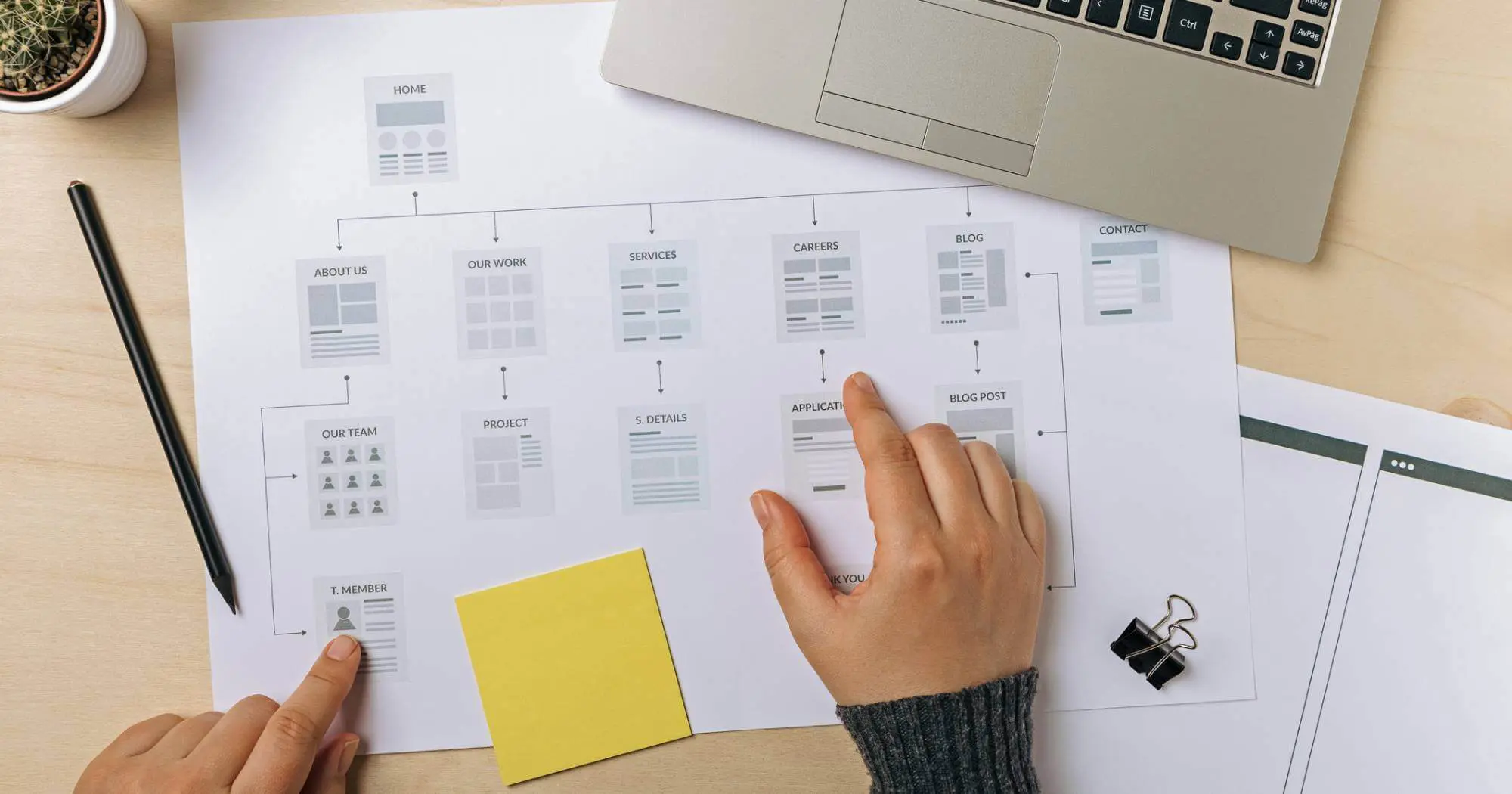
One way to plan your website is by creating a visual map or diagram called a sitemap. A sitemap can be used to show how pages relate and connect to your site. It may also help you identify any gaps in content that need filling to create a cohesive experience for users.
A wireframe is another document that can help guide planning efforts by visually depicting what elements will appear on each page of your site. This helps you to determine what text needs writing, where images need inserting, and other finer details. This means that everyone involved in developing the site has an idea about what content they need before construction can begin.
A strong plan also considers how users will move between pages, not just what pages exist. That might include mapping out key journeys such as:
- Browse > service page > enquiry
- Browse > product page > checkout
This is also the ideal point in the website development process to think about SEO foundations, including which pages target which search intent, what content needs improving or creating, and whether any redirects will be required.
Step 3: Design
Design is the third stage of the website development process, where designers create the look and feel of your website. Designers work hand-in-hand with developers to ensure that everything works seamlessly together. It includes things like page layout, graphics, and fonts used in your content.
The design elements of your site are useful for far more than aesthetic purposes. When composed properly, designs should guide your users through the site in an intuitive way. Try to zoom out and think from the perspective of a user seeing your site for the first time.
To make the design genuinely effective, it should be shaped by how people behave online today. That means designing with mobile-first layouts in mind, keeping key information easy to scan, and ensuring CTAs are visible without being intrusive.
Accessibility should also be part of this stage of the site development process. Things like readable font sizes, colour contrast, button spacing, and keyboard-friendly navigation all contribute to a better user experience – as well as supporting SEO too.
Step 4: Development
The fourth stage of the website development procedure is development – the process of actually creating the website and its content. Some elements of this phase, such as content writing and image gathering, can begin during the earlier phases to speed up development.
This phase also includes coding, where the actual website itself is created. Static page elements created in the design phase can then be integrated with interactive elements or special features also added. Many businesses choose to use a content management system (CMS) to make this stage of development easier.
This is also where technical decisions can have a big impact on performance and future scalability. Choosing the right CMS setup, implementing clean code, optimising images, and ensuring the site loads quickly all contribute to better user experience and stronger search visibility.
This particular process of developing a website is also the ideal stage to implement tracking properly – for example Google Analytics 4 (GA4), Google Tag Manager (GTM), and conversion events – so you can measure what matters from day one.
Step 5: Testing and delivery
Once you’ve completed the build of your site, it’s time to make sure the functionality meets your requirements. Testing is a routine and methodical process where every element of your website is checked. This includes testing page links, spell checking, and using code validators to ensure your code meets current web standards.
Beyond basic link checks and code validation, real-world tests should be conducted before launch too. This will often include:
- Testing every form submits correctly
- Checking that confirmation messages are clear
- Confirming enquiries land in the right email inbox
- Ensuring conversion events fire as expected in GTM
- Checking your site across different browsers (e.g. Chrome, Safari, and Edge)
- Making sure your site is responsive across different devices (e.g. desktop, mobile, and tablet)
This stage of the process of website development is also where SEO checks should be completed, such as reviewing indexability, confirming redirects (if relevant), and ensuring page titles and metadata are in place.
Once you’ve rigorously tested your website, it’s time to upload it to a server and launch. This is usually done by using File Transfer Protocol (FTP) software. It’s also important to give files one final test after they’ve deployed to make sure they have transferred properly.
Step 6: Maintenance
Maintenance is essential for the life of your website. It’s a continuous process that allows you to complete regular bug fixes to keep everything secure and running smoothly. It also gives you the option to add new features and performance improvements too which helps the long-term growth of your site.
This might simply include small iterative changes such as refining page content, improving navigation, adding new landing pages, or strengthening conversion paths based on real user behaviour. Listening to user feedback can help you with these changes, but it’s important to address any issues quickly so your visitors don’t find an alternative site they prefer.
This is ultimately why many businesses treat the website development process as cyclical rather than a one-off project. Launch gives you a strong foundation, and ongoing updates help keep your site competitive, secure, and aligned with changing customer needs.
Talk to us about your web development project
If you’re about to embark on a new website build or redesign, it helps to work with a team that understands the full process of developing a website – from early planning through to launch and ongoing optimisation.
At Fifteen, our specialist web development team delivers websites that aren’t just visually strong, but built to perform, convert, and scale with your business. If you’d like professional support navigating the website development process, don’t hesitate to get in touch with us today and we’ll talk through your goals, timelines, and next steps.