
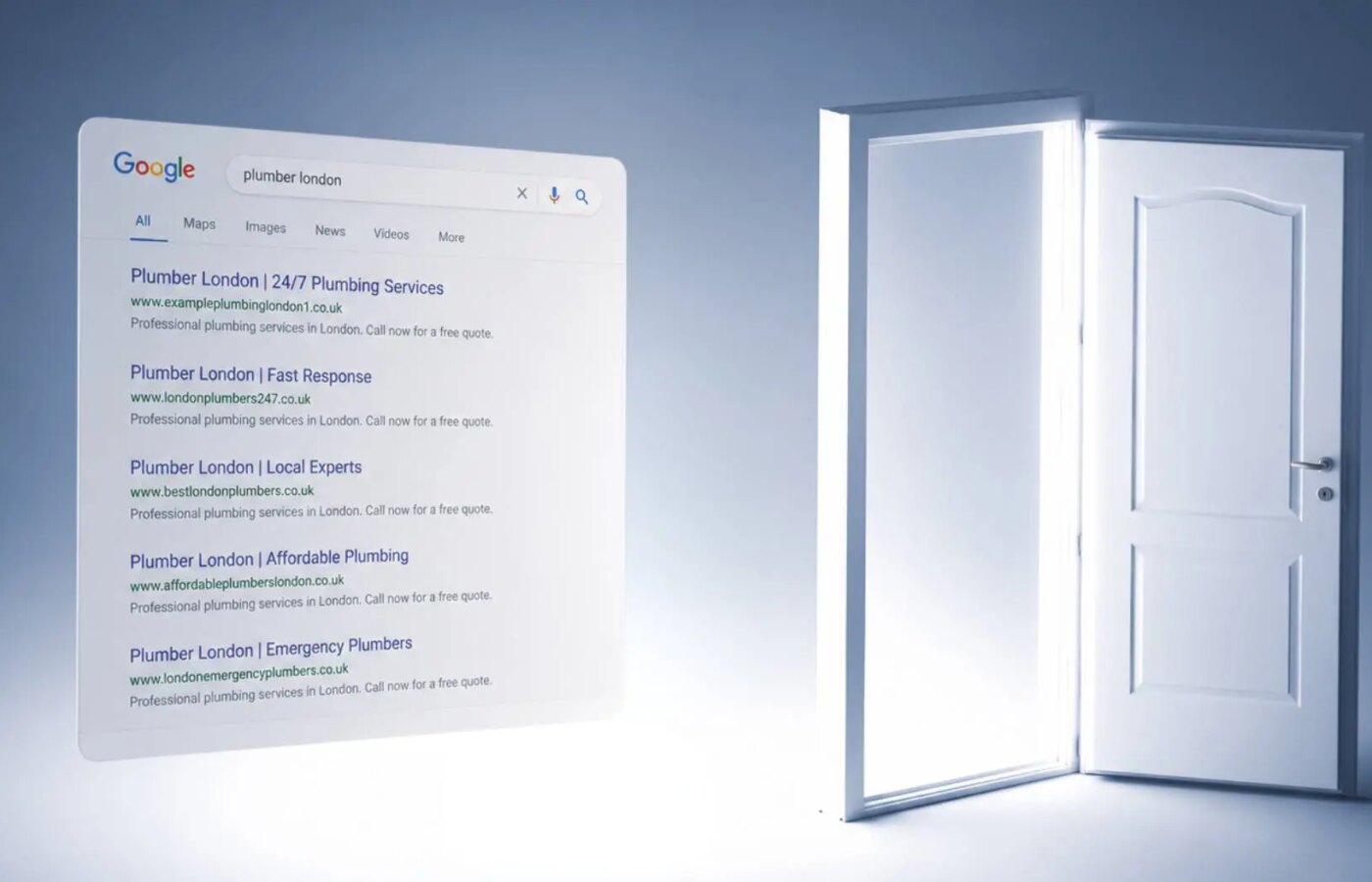
Doorway pages are a long-standing concept in SEO, but they continue to cause confusion for many website owners. At first glance, these pages may seem like a quick way to improve search rankings by targeting multiple keywords or locations. However, Google considers them manipulative, and using doorway pages can result in ranking drops, penalties, and diminished trust from visitors.
In this blog, we explain what doorway pages in SEO are, why they’re risky, and provide some actionable tips and strategies to avoid them, so you can safeguard your website while still growing visibility and authority.
What are doorway pages?
SEO doorway pages are low-value web pages that are created primarily to capture search traffic rather than provide genuine value to visitors. They often exist in clusters that target similar keywords, variations, or locations and funnel users to a single page without providing meaningful content.
Some key characteristics of doorway pages include:
- Targeted mainly for search engines – doorway pages are usually designed to manipulate rankings rather than serve user needs.
- Duplicated or thin content – they often feature near-identical content that adds little unique value.
- Redirects – SEO doorway pages tend to guide visitors to another page without providing helpful information themselves.
- Keyword variations – they’ll more often than not target singular or plural form keywords, minor phrasing differences, or city-specific terms without providing new insights.
Essentially, doorway pages exist purely for SEO purposes, and not for users. While they may generate clicks, they rarely satisfy visitor intent, which is why Google actively penalises them.
How do doorway pages differ from landing pages?
While doorway pages and landing pages might appear similar because both are designed to attract visitors, the two are fundamentally different in purpose, content quality, and user experience.
Doorway pages
As we’ve highlighted, doorway pages in SEO are primarily created to manipulate search engine rankings rather than serve the needs of users. The main purpose of doorway pages is to act as “entry points” for Google rather than genuinely helping users.
Landing pages
Landing pages, on the other hand, are user-focused and conversion-driven. Their goal is to provide real value, answer questions, and guide users towards a desired action, such as making a purchase, filling out a form, or subscribing to a service.
Creating landing pages with a focus on value and engagement not only improves user experience, but also builds trust, encourages conversions, and supports long-term SEO performance.
Why are doorway pages problematic?
Google considers doorway pages manipulative because they’re primarily created to rank for search queries rather than provide meaningful content to users. While these pages might generate temporary traffic, they carry significant risks that can damage both SEO performance and your website’s credibility.
SEO doorway pages are also explicitly flagged in Google’s Search Essentials. Websites using doorway pages in SEO risk penalties, ranking drops, or even complete removal from search results.
From a user perspective, doorway pages rarely provide real value. Visitors encountering repetitive, thin, or misleading content tend to leave quickly, which increases bounce rates and lowers dwell time. These metrics signal to Google that the content isn’t meeting user intent, which can further impact rankings.
Doorway pages also dilute domain authority. Multiple low-value pages targeting similar keywords compete against each other, which weakens the effectiveness of your SEO efforts.
As well as that, website trust and conversions are often affected. Even if doorway pages attract clicks, their lack of useful information means visitors rarely take the desired action, whether that’s filling out a form, making a purchase, or engaging with your services.
In short, doorway pages in SEO should be seen as a short-term tactic with long-term consequences. Businesses should focus on creating high-value, user-centric pages that align with Google’s guidelines and deliver measurable SEO benefits.
What are some examples of doorway pages?
SEO doorway pages can appear in many forms as they’re often tailored to manipulate rankings subtly. Some common examples include:
- City-specific variations – these are multiple pages like “Plumber in London” and “Plumber in Manchester” that all lead to the same generic service page.
- Keyword-stuffed duplicates – these are pages that are optimised for slight keyword variations with minimal unique content.
- Affiliate gateways – these are thin pages that are created to rank for affiliate products and redirect users without adding value.
- Redirect-heavy clusters – these are pages that immediately push visitors to another page, leaving the initial page essentially empty.
- Service variations – these are multiple pages for similar services targeting micro-keyword differences without providing distinct value.
Recognising the examples helps ensure you don’t inadvertently create doorway pages while developing content for SEO.
How does Google detect doorway pages?
Google uses sophisticated algorithmic analysis and manual review to detect SEO doorway pages. Some key detection methods include:
- Content analysis – repetitive, low-value, or keyword-stuffed pages are flagged.
- User engagement metrics – pages that have high bounce rates, short dwell time, and low interaction suggest poor content quality, which Google also flags.
- Redirect patterns – pages that funnel users to other pages without meaningful content will often signal to Google that they’re doorway pages.
- Keyword stuffing or manipulation – excessive focus on minor variations of the same search terms will trigger detection.
- Site structure evaluation – large numbers of similar pages targeting the same intent are monitored by Google.
Google rewards websites that focus on user value, comprehensive content, and proper structure, so ensuring pages provide meaningful experiences is critical for SEO stability.
How to fix and avoid doorway pages
Avoiding creating doorway pages and protecting your site requires a combination of strategic planning, user-focused content, and proper SEO practices. Here are some practical ways to do this:
Audit and consolidate your existing pages
Begin by reviewing your site to identify any low-value repetitive or thin pages, like clusters of pages targeting similar keywords or minor variations like singular and plural terms. Where possible, consolidate these into comprehensive, high-quality pages that provide real value to users and cover multiple search intents within a single authoritative page.
Focus on user intent
Every page should address a specific need or question that your visitors have. SEO doorway pages often fail in this aspect because they prioritise search engines over users. Make sure that your content is meaningful, actionable, and solves a problem or answers a query.
Limit excessive keyword targeting
Doorway pages frequently exist to capture multiple keyword variations. Instead of creating multiple pages, optimise a single page for a broader set of relevant keywords. Incorporate synonyms, long-tail variations, and related topics naturally within the content to maintain visibility while avoiding duplicate or thin pages.
Develop proper landing pages
When creating pages for services, products, or locations, focus on producing distinct, valuable landing pages rather than duplicating content across multiple doorway pages. Each landing page should have its own goal, clear messaging, and a direct call-to-action, helping both users and search engines understand its purpose.
Use 301 redirects strategically
If you identify existing SEO doorway pages, use 301 redirects to funnel traffic to relevant, high-value pages. This preserves link equity, improves user experience, and ensures that Google indexes your content correctly. Avoid leaving doorway pages live, as they can continue to confuse both users and search engines.
Implement strong internal linking
A well-structured internal linking strategy reinforces page authority and improves navigation. Instead of relying on multiple doorway pages, link relevant content naturally across your site to help users and search engines discover the most important pages.
Monitor analytics and engagement metrics
Regularly track user engagement, bounce rates, dwell time, and conversions to understand how your pages are performing. Doorway pages in SEO often fail to retain users, so monitoring these metrics helps you identify problem areas and optimise your content strategy proactively.
Invest in a long-term content strategy
Rather than trying to manipulate Google rankings with doorway pages, focus on building authoritative content clusters. You should create a structured network of pages that answer user questions comprehensively and support your primary topics. This approach not only satisfies visitors, but also signals expertise, authority, and trustworthiness to search engines.
Get in touch for expert help
SEO doorway pages can silently undermine your efforts, dilute your website’s authority, and damage user trust. That’s why you should focus on developing user-first content, incorporating proper internal links, and creating high-quality landing pages to protect your rankings and ensure long-term success.
If you’re unsure whether your website contains doorway pages, or you want expert guidance on restructuring content to comply with best practices, we can help. At Fifteen, our SEO specialists can audit your website, identify any doorway pages, and implement sustainable SEO strategies to drive visibility, engagement, and conversions.
Don’t hesitate to contact us today to discuss your requirements in more detail, and let us put our expertise to work so your site performs reliably and effectively in search results.